This isn't a claim. I want to say that before anything else, because what I'm about to describe is the kind of thing that gets people either nodding too eagerly or rolling their eyes, and I don't want either. It's just an observation I've never been able to fully put down.
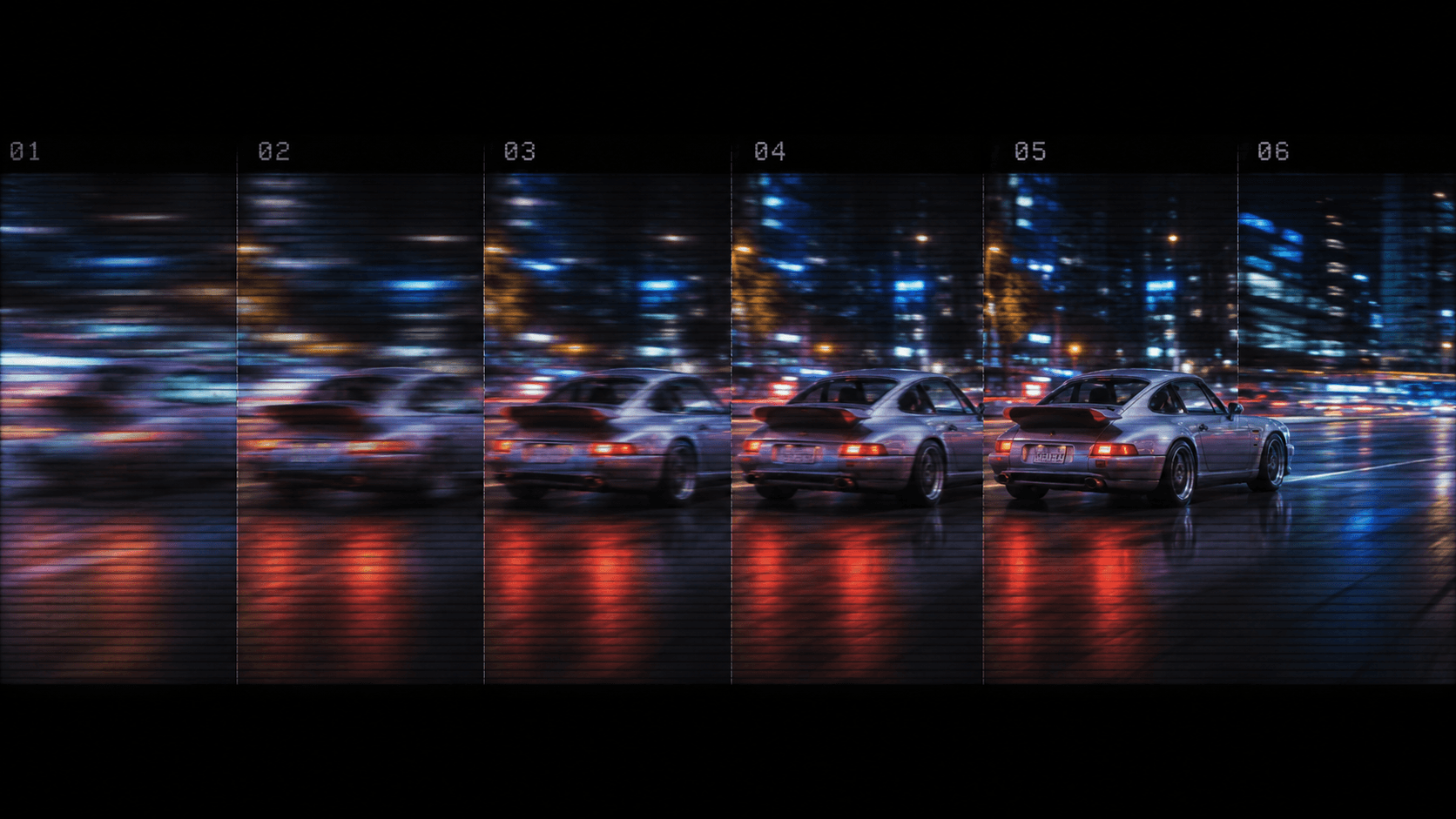
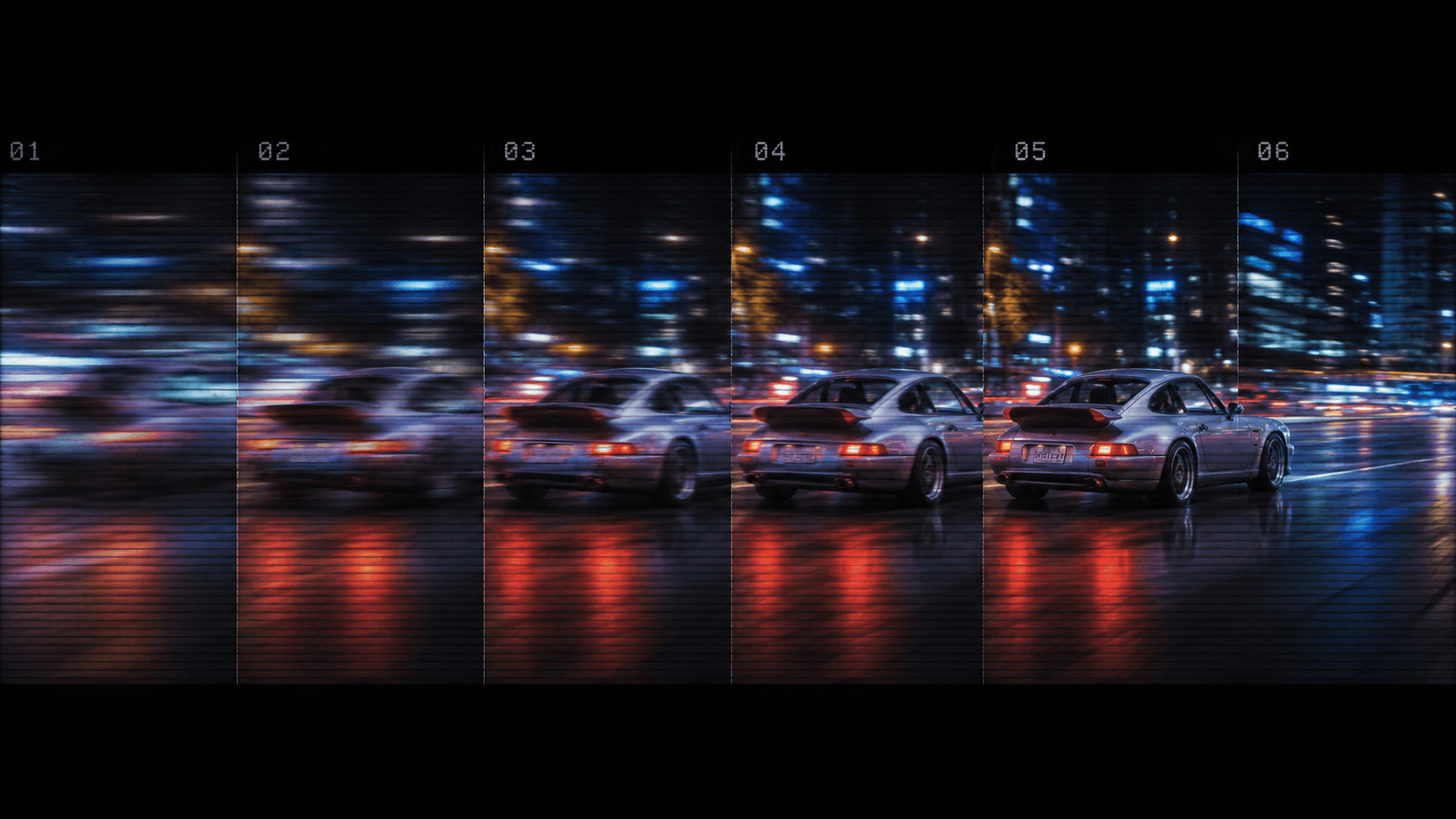
Sometimes — a certain quality of light, a certain stillness — the world stops feeling continuous and starts feeling like it's being drawn. Not blurry. Not dreamlike. Sampled. Frame. Frame. Frame. As if the smoothness I normally take for granted is a setting, and just for a second, the setting slipped.
The 50Hz tell
The most ordinary version is easy to verify. Fluorescent and LED light often flickers at the frequency of the grid — 50 or 60 times a second — and if you catch it at the edge of your vision, or wave a hand under it, you can sometimes see the strobing your brain normally smooths away. That part is just physics and biology. No mystery.
What unsettles me is that, occasionally, even daylight gives me a faint version of the same impression. Not flicker exactly — more a sense that what I'm seeing is sampled rather than poured. And the strangest part: it seems to depend on attention. The harder and more quietly I look, the more the seams seem to show. As if observing carefully enough lowers the frame rate.
Where this comes from
To be clear about the source, because it matters: this isn't a chemical story. It tends to surface in the opposite of intensity — in stillness, in meditation, in those long quiet stretches where you're doing nothing but paying very close attention to the raw fact of experiencing.
And that's the part I find genuinely interesting, independent of whether it “means” anything. Attention changes the thing it's pointed at. The careful observation of experience seems to alter the texture of experience. Whatever else is going on, that alone is worth sitting with.
Continuity as a render
Here's the thought I keep circling, offered strictly as a thought. What if smoothness isn't a property of the world at all, but a product of the brain? What if continuity is something the mind renders — interpolating between discrete samples, filling the gaps, hiding the seams — so that we get a usable, stable world instead of a strobing mess?
If that's even partly right, then continuity isn't something we passively receive. It's something we output. The seamless flow of reality would be less like a video file and more like a live render: generated on the fly, convincing precisely because the seams are being actively concealed. It's the same uneasy idea I run into in audio — a continuous sound is just samples fast enough to fool us.
Maybe the world isn't continuous. Maybe I am — and continuity is the trick that makes it bearable.
Why I don't just dismiss it
I'm a skeptic by temperament, so let me argue against myself. There are perfectly mundane explanations for all of this. The eye doesn't actually see continuously; it jumps in tiny saccades, and the brain stitches the gaps and even edits out the motion blur. Attention is weird. Expectation shapes perception. I know all of that, and I genuinely think it accounts for most of the experience.
But here's why I don't fully dismiss it. Even the boring explanation lands somewhere remarkable: the seamless, continuous reality you're experiencing right now is, by everyone's account, a construction. It is assembled, edited, and rendered by you. I'm not claiming the universe is a simulation — that's a different and much larger question. I'm saying the felt continuity of experience is clearly built, and that's already strange enough to keep me up.
What I do with a feeling like this
I don't turn it into a belief. I turn it into a question, and questions are useful even when they never resolve. This one feeds directly into the work — it's the reason an interactive essay on the site lets you tear the “frames” out from under reality with your cursor, and the reason perception keeps showing up in everything I make. Careful observation is a method, not just a mood. You point your attention at something ordinary, on purpose, and see what cracks.
I don't have an answer. I have an attention, and a suspicion, and a strong preference for sitting honestly with both rather than resolving them too early. That's usually exactly where my best questions start — not with a conclusion, but with a flicker I can't explain.